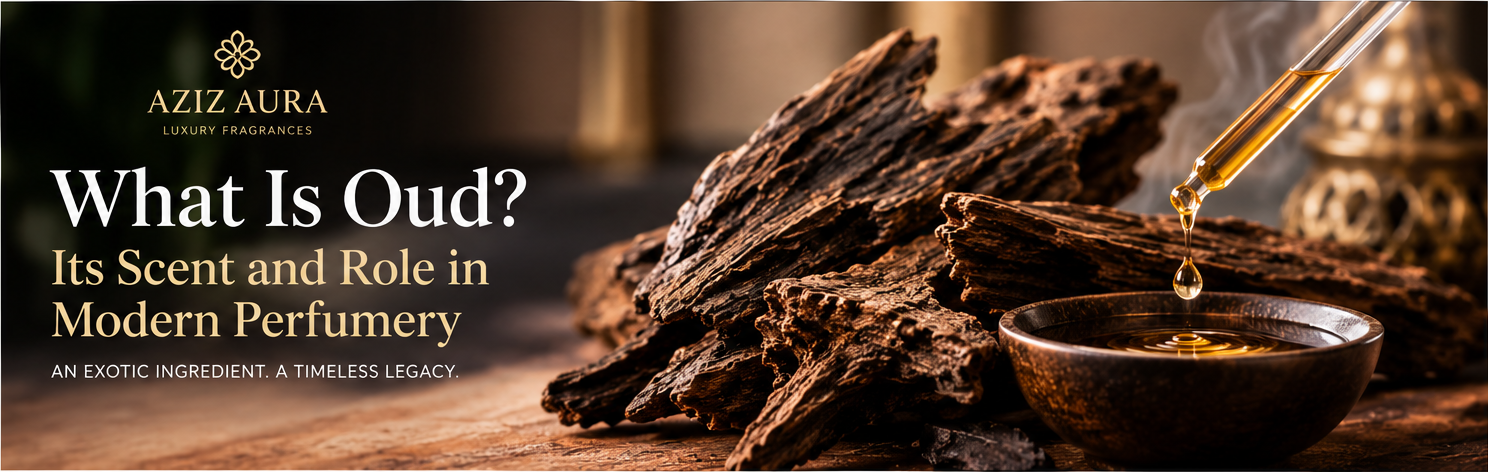
Quick answer: What is oud? Oud is the richly aromatic, resinous material associated with agarwood, formed in certain Aquilaria trees. In perfume, oud can smell woody, smoky, earthy, leathery, balsamic or gently sweet. Its character varies by source, processing and the other notes in a fragrance.
Oud has a long history in fragrance culture, but modern perfumery gives it many different expressions. This guide explains what oud is, what it smells like, how perfumers use it and how to find a style that suits you.
What Is Oud? Understanding Agarwood
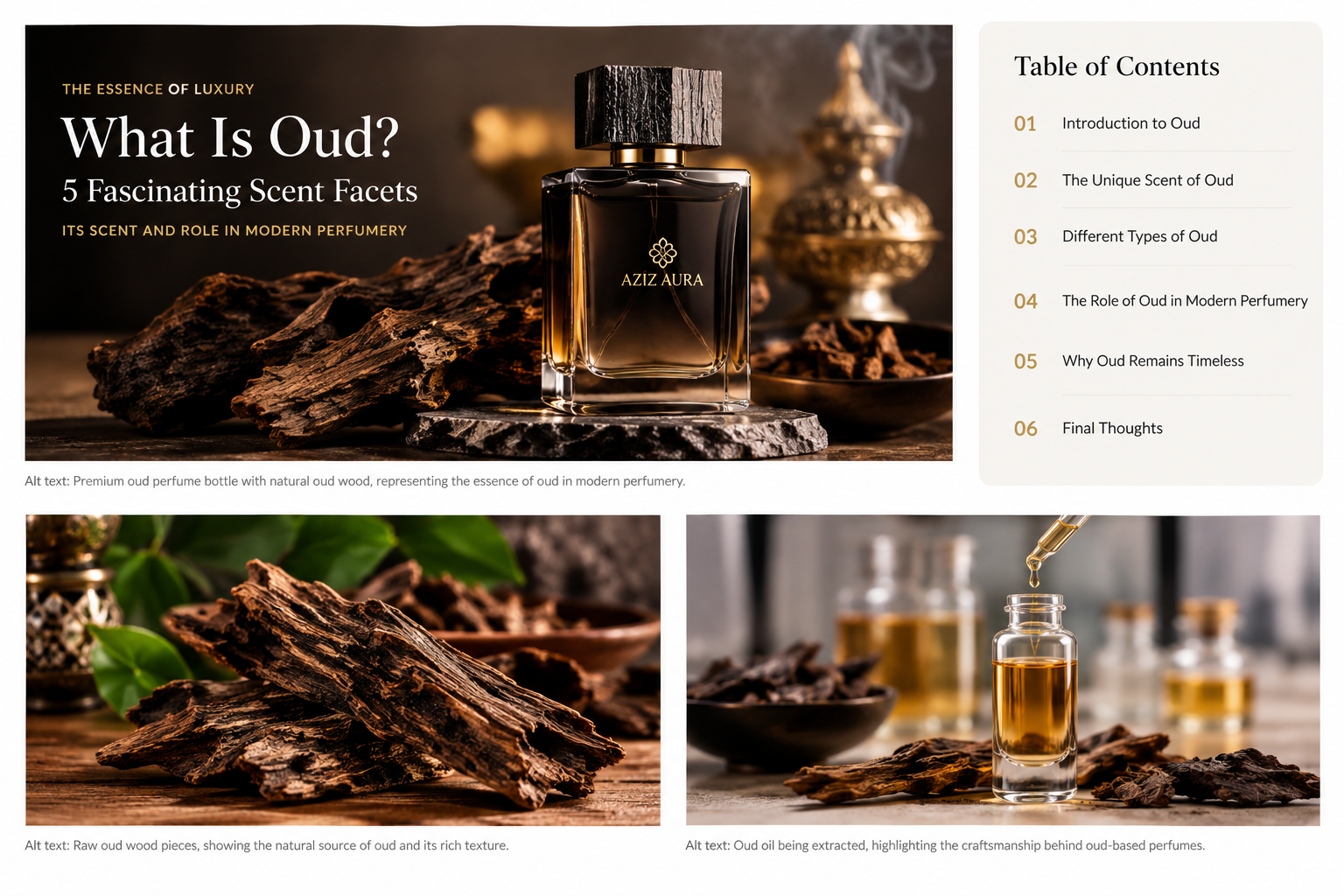
Agarwood develops when certain trees produce fragrant resin in response to stress or injury. The resin-rich wood is prized for its complex aroma and is sometimes distilled into aromatic oil. The words oud, oudh and agarwood are often used together, although a perfume labelled oud does not necessarily contain natural agarwood oil.
Natural materials differ from batch to batch. Species, growing conditions, resin formation and distillation can all influence the result. For further botanical and conservation context, see the CITES official website, which covers international trade controls relevant to protected wildlife and plant materials.
What Does Oud Smell Like?
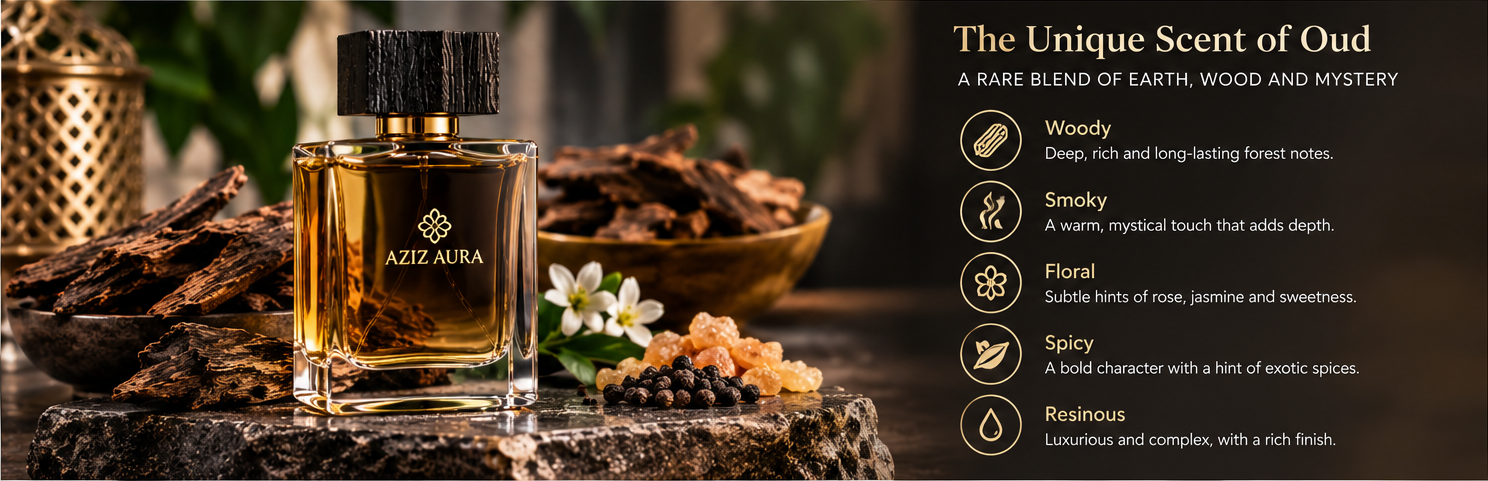
There is no universal oud scent. Some interpretations are dark and smoky; others are smooth, warm and polished. Common impressions include:
- Woody: dry, deep wood tones that anchor a composition.
- Resinous: a rich, balsamic warmth.
- Smoky: an incense-like or gently charred nuance.
- Earthy or leathery: a textured, sometimes animalic character.
- Sweet: a softer finish when blended with amber-style, vanilla or floral notes.
What is oud like on skin? The best answer comes from testing the individual perfume: the opening may be bold while the dry-down becomes rounder and quieter.
Natural Oud vs Oud-Inspir ed Perfume Accords
Natural oud comes from resinous agarwood materials. An oud-inspired accord is a perfumer’s interpretation built from a blend of other aromatic ingredients. Both approaches can create beautiful fragrances, but they are not interchangeable claims about ingredients. Read a brand’s product disclosure rather than assuming every bottle named “oud” contains natural agarwood.
Because sourcing matters, shoppers interested in natural materials can ask a seller about provenance and documentation. For a general introduction to fragrance ingredient safety and industry standards, visit the International Fragrance Association (IFRA).
How Oud Is Used in Modern Perfumery
Perfumers often place oud or an oud-inspired accord in the heart or base of a composition, where it can give depth and character. Popular pairings include rose for a floral contrast, saffron or other spices for warmth, sandalwood for softness, and amber-style accords for a rounded finish. Fresh or citrus notes can make an oud composition feel lighter at first spray.
Oud is not automatically stronger, longer-lasting or more luxurious than every other ingredient. Concentration, formulation, skin, climate and application all influence the experience. Learn how notes develop in our guide to top, heart and base notes.
How to Choose an Oud Perfume
- Start with your preferred mood. Choose a softer floral-woody blend for everyday wear or a richer smoky style when you want a dramatic scent.
- Try it on skin. Paper strips are useful, but skin testing reveals how the fragrance develops on you.
- Wait for the dry-down. Revisit the scent after the opening settles rather than judging it immediately.
- Apply moderately. Start with a small amount and adjust according to the composition and setting.
- Check the product description. Look for clear information instead of assuming “oud” always means natural agarwood.
If you are still exploring your taste, our signature perfume guide can help you compare fragrance families. You can also browse the AZIZ AURA perfume collection for your next scent.
Frequently Asked Questions About Oud
Is every oud perfume made with natural agarwood?
No. Some use natural oud materials, while others use reconstructed oud-inspired accords. Check the manufacturer’s description.
Is oud suitable for daily wear?
Yes, depending on the blend, application and your preferences. A softer woody or floral oud interpretation can be easier to wear casually.
Does oud always smell smoky?
No. It can also feel resinous, earthy, leathery, sweet or smooth. The surrounding ingredients make a major difference.
Is oud a men’s or women’s fragrance note?
Neither exclusively. Oud is used across men’s, women’s and unisex fragrances; choose by scent rather than label.
Final Thoughts
What is oud in modern perfumery? It is both a distinctive aromatic tradition linked to agarwood and a versatile creative direction for contemporary fragrances. Explore different blends, allow each one to settle on your skin and choose the scent that feels right to you.